Title: Mighty Lak'a Rose
Composer: Ethelbert Nevin (1862-1901)
Arranged by Michael Banner
Performed by
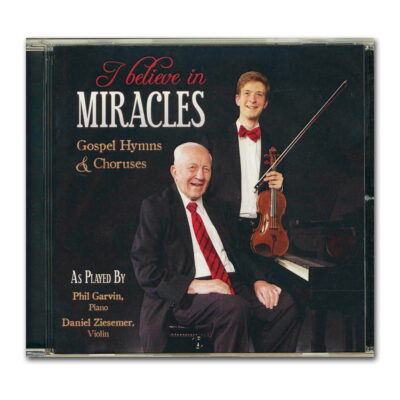
Daniel Ziesemer, violin ([email protected])
Jacob Bernhardt, piano
This lovely instrumental version of the song begins with a very short, soft piano intro, soon joined by the strains of the violin’s sweet voice, playing the tune of the lyrics. Double stops are integrated throughout the middle of the piece, ending with single notes which repeat the same pattern as at the beginning, ending in thrillingly beautiful high notes as the finale.
History and Description of Song:
Completed in 1901, and known as a “dialect song” because the words are written in African American dialect (the title meaning in official English “mighty like a rose”) and is from the perspective of a black nanny (“Mammy” as many black nurses were lovingly called) singing to the blue-eyed baby boy she is looking after, and saying he is like a rose. As a vocal piece, it has been sung by notable figures such as Deanna Durbin, Bing Crosby, Jane Powell, Petulant Clark, and adapted and sung by Frank Sinatra, Marguerite Dunlap, and Geraldine Farrar.
History of Composer and Lyricist:
Ethelbert Nevin, the composer of this song, began playing piano in his hometown of Edgeworth, Pennsylvania at the tender age of four years, later studied abroad in Dresden and Berlin, learning more also in the States. He taught and played in Boston and Paris, moving to Berlin and then to Tuscany and on to Paris for composition, returning to America in the late 1890s where he resided until his death in 1901 at the age of 38- due to much overwork. “Mighty Lak’ a Rose” was his last work before he died.
He was the husband of Anne Paul Nevin, and the father of two children. His family still owns the summer home he had which is Blue Hill, Maine. It has the enchanting name of ‘Arcady’.
Frank Lebby Stanton was the lyricist, who was given the title of the first poet laureate of Georgia in the United States by the governor. He grew up in Charleston South Carolina on a plantation, and was inspired by Isaac Watts’ and Charles Wesley's hymns. During the Civil War, he at the age of 12 entered the newspaper business as an apprentice to a printer, and later was employed by the Smithville News. He met and married his wife, Leone Josey while working for them, and became night editor of a newspaper in Georgia after they moved there. He then wrote extensively for a different paper, his work becoming very popular. Many of his poetry and ballads were set to music and became hit songs, including “Mighty Lak’ a Rose”. His tone of writing was usually in the dialect of southern African Americans or of lower class whites.
Sweetest li'l feler,
Ev'rybody knows;
Dun 'no' what to call him,
But he's mighty lak' a rose!
Lookin' at his mammy
Wid eyes so shiny blue,
Make you think that heav'n
Is comin' close ter you!
When he's dar a sleepin'
In his little place,
Think I see the angels
Lookin' through de lace,
When de dark is fallin'
When the shaders creep,
Den dey come on tiptoe
Ter kiss 'im in his sleep.
Sweetest li'l feler,
Ev'rybody knows;
Dun 'no' what to call him,
But he's mighty lak' a rose!
Lookin' at his mammy
Wid eyes so shiny blue,
Make you think that heav'n
Is comin' close ter you!
19